Artificial Intelligence
My Final paper for Digital Humanities spring 2016 is written on the arguments for artificial intelligence. I conducted my research through philosophy topics and arguments and computer science and programming topics. As I researched I found many exciting and interesting findings. Click on the link above to learn more!

Thursday, April 28, 2016

Final Paper: Ashley Back
My paper proposes the idea that passive consumption is a form of interactivity and uses science journals as evidence. It discuses knowledge in DH, the brain's reaction to literature, and the brain as a computer. LINK
Wednesday, April 27, 2016
Final Paper: Chad Kusenko
VR Gaming
In my final paper i researched Virtually Reality gaming. Specifically I looked at how it works, How much it is growing, popular headsets and products being used today, as well as the safety of the it. I chose this topic because i was interested in learning more about it. After hearing about it in class, i wanted to figure out first hand of what this new technology is about. This type of gaming might be something i will get into in the future.
In my final paper i researched Virtually Reality gaming. Specifically I looked at how it works, How much it is growing, popular headsets and products being used today, as well as the safety of the it. I chose this topic because i was interested in learning more about it. After hearing about it in class, i wanted to figure out first hand of what this new technology is about. This type of gaming might be something i will get into in the future.
Wednesday, March 30, 2016
I walk toward one of the three
doors and wonder what path I want to choose. The first door would take me into
the past, where I could right my wrongs. Start anew. The second would take me
into the mysterious future where there are countless unknown possibilities. The
third would take me anywhere I wanted. Anywhere at all. I wondered how I went
from getting a salad at freshens to deciding my fate by picking a door. This
was no longer relevant, because I knew that I had to choose, so I did.
I picked the door that took me into
future. I did not fully understand how different it would look until I walk
through the door. Almost everyone was traveling via hover boards and electric
cars. The roads were made of many hexagonal shaped plates that appeared to be
solar panels. Ohh, I think I’ve seen this on my timeline at some point. I guess
it got approved. I’m not going to lie, I was kind of expecting flying cars and
robots that greeted me on the sidewalk but I guess you can’t win them all. I
looked behind me to see if the magical door was still there. It wasn’t. Then I
pinched myself because I am pretty sure that this not real. But it is. This is
real.
Just as I was about to walk to the
futuristic Sweet Frog, which would have been amazing, some big men in S.W.A.T
looking uniforms approached me. They scared me a little, but I try to keep my
cool because I don’t even know where I am. Before I could say anything, they
snatch me up and throw me into a cop car. Wait they didn’t read me my rights.
Is this even America?
Anyway, now they have me chained to
a table in a small room. The dark tinted glass was obviously one of those one way
mirrors, they act like I don’t watch CSI.
“Why am I here?” I shouted dramatically. “You can’t hold me
here without telling me why! I’m pretty sure that’s illegal.” I think…at least
that’s what I gathered from T.V. After hours of sitting here someone finally
walks in. He was black man who appeared to be middle aged. He was dressed in a
grey suit and wore black glasses.
“Really, wearing shades indoors.” I said because I am not
myself when I’m hungry. “You must be an asshole, I just get that vibe from-“
“I’m wearing these because I’m blind.” He said.
“I am so sorry, I am just lost and confused and hungry, and I
have been here for hours.” I rambled
“It’s been ten minutes…” He sounds annoyed at me. I didn’t
ask for any of this. I just wanted to see the future and I am seriously feeling
attacked right now.
“Oh,” I replied. I sat back in my chair and tried to pull
myself together. Then I mumble. “I never should have walked through that door.
“Jamil Wright,” He said. Wait how does he know my name? “That
door is the best thing to ever happen to you. You are one of the only people in
this world that is compatible with the Three Doors. He handed me an envelope with
instructions. It was more like directions.
“What is this?” I asked.
“Use the three doors to go back in time and teleport to this
place.” He said. “Trust me son, this is for the sake of humanity. I know it
might not look it but we are on the brink of death here. And we all parish if
you do not do this correctly. Is that clear?”
“….okay.” So after about a half hour of the three door shenanigans
I finally get to where I need to be. In front of the door to a huge mansion. I
ring the doorbell. And then I see him. Donald fucking Trump.
“Who the hell are you?” Trump said. I put on a pair of black
shades and lift a silver pen In front of him. It flashes and now he looks brain
dead…this is good.
“Hey asshole,” I say. “Yeah you know that terrible idea you
have. The thing about you becoming a president?”
“…..mmhmm”
“Yeah, just don’t.”
~Elijah B.
Hyperlink Narrative
Laura Soltis
Extra Credit Narrative
Due 3/31/2016 4:00 p.m.
Digital Humanities
I am in a room where there are three doors.
One door will take me into the past
One door will take me into the future.
One door will take me anywhere I can imagine.
I have to choose one and only one.
Its so hard, how can you pick between the three? I will choose at random.
Simply close my eyes and walk and see where I end up. As soon as I walk through
a door this is what I see. I am in Singapore!!
I made it


On day two,
I met up with Jon for breakfast. Today he said we were heading to the trick eye museum. I have
always wanted to there! It has over 80 optical illusions thought the entire museum!
Here are a few of the pieces of art that will blow your mind!


All in all this experience was
amazing and I got to visit my dream world. I would love to move here and live
there some day. But for now it is just a dream. I am glad this is where the
door led me. If you ever get the chance
to travel, Singapore is the place to go!
Tuesday, March 29, 2016
eXistenZ
Once one has completed their viewing of the 1999 film eXistenZ, it is easier to contextualize aspects of the film, beyond the anti-technology theme.
The films stance on technology is built upon the following ideas:
- Technology and morality
- Superseding religion
- Endangering to reality
- The bastardization and devaluing of reality
- The bastardization of the body
The film opens and closes in a church, where the tech demonstrations are taking place, making game play like a communion. What this says that in both the reality of the game in tranCendenZ and the world outside of it, have created a spirituality in regards to gaming, but gaming is at odds with realism, and what's a religion without it's wars? From the beginning, biblical talk is used. "Death to the Allegra even the way Allegra talks about eXistenZ with Pikul is similar to gospel. Which alludes to the next topic. There's always been the idea that religion and morality are one and the same, while this isn't necessarily the case. It seems to be the viewpoint of the people who are playing the game tranCendenZ.
Throughout the film there's an association with technology and morality that is frequently voiced by Pikul. There's also the schism between the tech industry and those who support realism, who pursue Allegra with teeth-shooting guns, further emphasizing the realists beliefs in organic life and the importance of reality.
Additionally, Allegra, as I've said before, speaks about video games like gospel, but she also seems to be on drugs, which brings me to my next point. Technology is a drug. This is a more obvious theme. Allegra has this spiritual connection to eXistenZ, and goes along with the idea that realism is synonymous with morality, but we see Allegra and Pikul sprawled out on a bed after awaking from eXistenZ, like someone waking up from a heroin binge.
From there come the suggestions that the game is a from of psychosis, voiced by Pikul.

Tuesday, March 1, 2016
Do Games Count?
The psych world continues to debate whether or not video games have cognitive benefits, with one study countering the results of another, and it is even suggested that too much screen time can cause "structural and functional changes in brain regions involving emotional processing, executive attention, decision making, and cognitive control." The most important aspect of literature is its intellectualism. Being detrimental to cognitive well-being would make video games different from literature. Or does it?
In the 19th century, a time fruitful with canonical literature, it was thought that fiction did not exercise the mind and caused mental deterioration, caused dissatisfaction with one's life, and "numb the soul to tragedy" (desensitization).
While there is more science to accusations of video games negative effects, and more research is needed into seeing how video games alter the mind, at this time, in respect to the question of whether or not they count as literature, it is important to keep this quote from Maxwell Neely-Cohen's "Appetite for Risk: At the Intersection of Games and Literature" in mind.
When it comes to the publishing industry, Neely-Cohen opines
 |
| "My introduction to e-lit, the Sega Pico" -Ashley Bach |
In the 19th century, a time fruitful with canonical literature, it was thought that fiction did not exercise the mind and caused mental deterioration, caused dissatisfaction with one's life, and "numb the soul to tragedy" (desensitization).
While there is more science to accusations of video games negative effects, and more research is needed into seeing how video games alter the mind, at this time, in respect to the question of whether or not they count as literature, it is important to keep this quote from Maxwell Neely-Cohen's "Appetite for Risk: At the Intersection of Games and Literature" in mind.
As a kid, video games taught me just as much about writing as novels did. The thousands of hours I spent with my head in books were matched by the thousands of hours I spent at my computer. In my child brain, they didn’t seem as if they were disparate forms belonging to different centuries. I’m not sure I even recognized the difference.The article is of particular interest to someone in digital humanities in his call to action regarding the publishing industry and gaming industry coming together in order to help each other overcome modern shortcomings.
When it comes to the publishing industry, Neely-Cohen opines
Even in terms of pure content, contemporary fiction too often fails to fully evoke 21st-century life and contend with its burgeoning issues. We writers disproportionately focus on the past, or worse, replicate the form and structures of centuries gone without appetite for the risk, resistance, and failure innovation entails.As for the gaming industry, he says this
Despite the best efforts of a growing cadre of games critics, journalists, writers, and theorists, not to mention a legion of talented independent developers, the industry is plagued by issues of cultural legitimacy and a real struggle to grow out of repetitive content.It is important to appreciate all narrative forms. Film is already considered to be an art form and something that can be studied at depth, like a novel, and there may very well be a day in years to come, where video games are seen with the same reverence.
Monday, February 22, 2016


Thursday, February 18, 2016
Monday, February 8, 2016
Google Maps
Ashley Bach
"Homesick"
Synopsis

"Homesick"
Synopsis
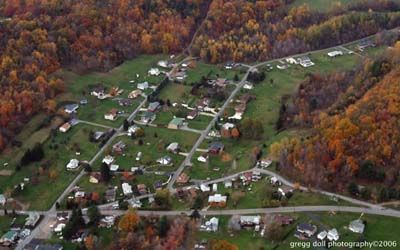
- Inspired by Shelley Jackson's "My Body: a Wunderkammer." This essay mixes fact and fiction and is centered around the Village of Allport, where I've lived for nearly all of my life.
Elijah Fludd-Brittingham,
Chad Kusenko
"My Granddaughter and I"
Synopsis
Synopsis
- "My Granddaughter and I" is a fictional google maps story that takes place in Philly. Hope you enjoy!
Laura Soltis
Synopsis
- Follow the map to see all the significant places of the first 6 months of a couples relationship.
Synopsis
- My essay is a story about how I got introduced to one of my passions, Hunting.
Thursday, February 4, 2016
Blog the Fourth be with You
This post will be focused on the Monday readings, Jason Nelson's "Evidence of Everything Exploding" and "The Sweet Old Etcetera," comparing and contrasting based on

- media format
- modes of interaction
- coherency
Media Format
Evidence of Everything Exploding
This work by Jason Nelson is absurdist to say the least. It is reminiscent of a segment on an HBO Family show Crashbox called "Distraction News" albeit, more intense, it is similar in its art style and the fact that it uses sensory overload as creative device.
Nelson uses video game elements with text as a background in addition to disorienting sounds, punctuated by videos of pictures on a fence...He would have gotten along famously with Shaye Saint John creator Eric Fournier.
The Sweet Old Etcetera
In contrast, Alison Clifford's piece is soothing in its use of plucky sounds and calming art as it elucidates one of America's most complex poets.
Clifford may have been remiss in not including the following poem.
anyone lived in a pretty how town
E. E. Cummings, 1894 - 1962
(this was the first Cummings poem I ever read)
anyone lived in a pretty how town
(with up so floating many bells down)
spring summer autumn winter
he sang his didn’t he danced his did.

Women and men(both little and small)
cared for anyone not at all
they sowed their isn’t they reaped their same
sun moon stars rain

children guessed(but only a few
and down they forgot as up they grew
autumn winter spring summer)
that noone loved him more by more

when by now and tree by leaf
she laughed his joy she cried his grief
bird by snow and stir by still
anyone’s any was all to her

someones married their everyones
laughed their cryings and did their dance
(sleep wake hope and then)they
said their nevers they slept their dream

stars rain sun moon
(and only the snow can begin to explain
how children are apt to forget to remember
with up so floating many bells down)

one day anyone died i guess
(and noone stooped to kiss his face)
busy folk buried them side by side
little by little and was by was

all by all and deep by deep
and more by more they dream their sleep
noone and anyone earth by april
wish by spirit and if by yes.

Women and men(both dong and ding)
summer autumn winter spring
reaped their sowing and went their came
sun moon stars rain
Modes of Interaction
Nelson has the reader navigate the work in a video-game-like manner. Clifford has a point-and-click based work. One can say it is like a video game, but not much more is done than pointing and clicking. However, there are times when the reader must find the correct object to click, and the game includes a type of piano formed by the asterisk-flowers.

Coherency
Nelson is ambitious. The work is best appreciated for its technical qualities and the fact it is so absurd. Trying to glean any deep meaning would require another playthrough. The final level, where the player had to stop moving in order to not be killed, was clever, but death in the game is five times as annoying when you hear. "You've been harmed by the game that harms you." Sometimes it's good to play it on mute.
Clifford makes Cummings poetry come to life. By interacting with it the player-reader can enjoy the words as the works of art that they are.
--------------------------------------------------------------------------------------------------------------------------
Credits
Writing: Ashley Bach
Editing: Chad Kusenko
Images: Laura Soltis
Hyperlinks: Eli Brittingham
Wednesday, February 3, 2016
Words from Goldsmith
Often, the value of art is that it has no practical value.
With an unprecedented amount of available text, our problem is not needing to write more of it; instead, we must learn to negotiate the vast quantity that exists.
Friday, January 29, 2016
On "My Body, a Wunderkammer"
Wunderkammer -- Wun-der-kam-mer /ˈvo͝ondərˌkämər/ plural: Wunderkammern
- meaning: a place where a collection of curiosities and rarities is exhibited
- origin: German
- literally means "wonder chamber"
Writer-Illustrator Shelley Jackson created "My Body, a Wunderkammer" in 1997, serving as an explanation for the low-fi sound of breathing that introduces the piece, and the art style that is not as refined as the illustrations Jackson used in 2005 for Kelly Link's Magic for Beginners.
 |
| Magic for Beginners, Kelly Link (2005). Cover design by Shelley Jackson) |
 |
| From "My Body, a Wunderkammer" (Larger) |
When I say animalistic, I merely mean to say, it's visceral, even primordial, but that's not good descriptors, as the work is thoughtful, but does so without meaning to be. The writing itself seems to be stream of consciousness, like the speaker looked at her naked body in the mirror, zeroed in a particular part, and wrote about it as the words came to her.
There was one good thing about the uncomfortable plastic chairs I sat in all through grade school: if I rubbed my arm against the back of the chair on a dry day, I got a funny feeling as if there were a layer of warm felt between my skin and the plastic. If I held my arm the right distance away, every hair stretched straight out toward the plastic. Then if I moved it slightly further away, every hair would droop in unison. With infinitesimal movements, invisible to everyone else, I could make my hairs straighten and bow, straighten and bow. (link)
Credits
Writing: Eli Brittingham & Ashley Bach
Editing: Laura Soltis and Chad Kusenko
Wednesday, January 27, 2016
In absentia by J.R. Carpenter and "Mr. Plimpton's Revenge" by Dinty Moore
On In Absentia
 |
| Buster from Arthur (meme) |
In absentia functions using Google Maps a key element, not unlike the Dinty Moore piece, but J.R. Carpenter morphs the Google Maps essay, using additional elements that while complicating the experience, make the site otherworldly and, therefore, conflates the surrealism of the In absentia. The prose at times uses a heightened language that implements sound techniques found in poetry, "Your backyard used to have an ancient wooden door sagging blue askew amidst a retinue of vines clinging to a crumbling cinderblock wall guarding an oasis of lazy Brown-Eyed-Susans."
 |
| From In Absentia |
The surrealism or magical realism comes into play after a close examination one can see that the placements of certain things, the image of the door included with, for example, does not seem logical. This is a juxtaposition of what we understand Google Maps to be, a factual information resource. This is obviously a factual entry on the map, but the door seems out of place with the urban apartment where the entry is said to take place. Was that door really there, or did J.R. Carpenter take a liberty, and what motive did she have for setting that door as the symbol for this place?
Another property of importance is how some of the features, namely street view, elevates the experience, by turning the setting into a known place without ever being there, and a place that can be explored like the land in the classic Sega game/childhood mindf*** Myst (walkthrough for Windows 95 version below)
On "Mr. Plimpton's Revenge"
In the piece of e-literature, Mr. Pimptons Revenge, a young college student was asked to chauffeur the famous writer, Mr. Plimpton. Between a $400 crap car, being hungover from drugs and not having enough money for lunch, it was not the greatest experience for Mr. Plimpton to say the least. Throughout this google maps essay Dinty had a few more odd acquaintances with Mr. Plimpton almost making him seem as if he were stalking him! The Revenge Mr. Plimpton gets is when a few years later when Dinty has become a writer with a few books of his own, he sees Mr. Plimpton at a conference… to find out the revenge he gets you must read this essay! click here to read the Mr. Plimptons Revenge
I found this piece very interesting and thought it was different but a fun read. I couldn’t help but to catch myself laughing out loud in a room by myself. I had a smile on my face during the entire piece. It also kept me in suspense in wanting to know what the revenge was. As you read and follow his experience around on the map with this easy to follow format, you will feel more engaged and attentive during the entire story. This is a read I will never forget and would recommend it to anyone in need of a good laugh. It will make never think of google maps the same way again.
Credits
Writing: Laura Soltis and Ashley Bach
Editing: Chad Kusenko and Eli Brittingham
Hyperlinks: Chad Kusenko, Eli Brittingham, and Ashley Bach

Saturday, January 23, 2016

Friday, January 15, 2016
Elijah's Post
What is Digital Humanities?
Digital Humanities is the link between different aspects of humanities such as history, literature, music etc. to media. For example the app Instagram is social media application that allows the user to post pictures for their followers to see. This is a great way for artists and photographers to showcase their work and express themselves. This falls under the making/creating aspect of Digital Humanities. There is also an archival/database aspect to Digital humanities that allows more accessibility to information. An example of this is Wikipedia.
Digital Humanities Defined
What is Digital Humanities?
When thinking about Digital Humanities, I think about the Humanities themselves. Which are
the fields of Education, Art, History, and Foreign Language. Digital Humanities takes these
humanities and uses them in modern technology in order to better explain them in different ways
than they were initially intended. With the use of modern technology, it is much easier and more
effective to look at the humanities. Since the field is constantly changing and growing, there is
always something new to see in the field of Digital Humanities.
-Chad Kusenko
A Definition of Digitial Humanities
Digital humanities is literature that functions with technology being an essential part of its production. Matthew Kirschenbaum referenced the Wikipedia article on the concept, which, to paraphrase, said that digital humanities incorporates aspects of literature and literary scholarly in en electronic form. Works relating to digital humanities will be investigative and analytical, but most importantly they will be a synthesis of "presentation and information." Examples of digital humanities include, but are not limited to, Twitter accounts that use textbots and interactive literature.
-Ashley Bach
 |
| Translation (x) |
What is Digital Humanities?
What is Digital Humanities?
I believe Digital Humanities is the way we can use technology to create and share new knowledge. Digital humanities includes the databases that are used to collect information digitally. It also includes research or scholarship which can be the analysis of any digital multimedia. Lastly it is the creation of digital art for example; multimedia, games, and crowdsourcing. It is more than just taking something from the humanities and something from the digital world and just combining them. It is about creating something that cannot be done without the digital world.
Laura Soltis



Subscribe to:
Comments (Atom)